Bridge lighting has become much more than just turning the lights on after dark. Today, it combines safety, design, and user experience to transform ordinary infrastructure into recognizable landmarks. When done correctly, lighting improves visibility for vehicles, cyclists, and pedestrians while supporting safe navigation for ships passing underneath.
According to the International Association of Lighting Designers (IALD), cities that implemented modern bridge lighting systems have seen an average 36% reduction in nighttime accidents on and around bridge structures. It also makes travel feel safer and more intuitive, even in extreme weather or low-light environments.
In 2023, Singapore and Dubai reported a 14–18% increase in waterfront tourism after launching permanent bridge lighting installations. With smart planning and the right fixtures, a bridge becomes not just a means of crossing, but a visual symbol for the entire community.
Importance of Bridge Lighting
Bridge lighting goes beyond simple illumination. It plays a vital role in safety, navigation, and aesthetics, while also strengthening community identity and making the structure a memorable feature of its surroundings.

1. Safety & Visibility
Bridge lighting plays a critical role in preventing accidents and improving visibility for drivers, cyclists, and pedestrians. The U.S. Federal Highway Administration reported that bridges with upgraded LED roadway lighting achieve up to 50% fewer vehicle incidents compared to poorly lit bridges. A well-lit bridge provides clear guidance across traffic lanes and walkways, helping users feel secure during nighttime travel.
2. Navigation Aid
For bridges built over rivers or waterways, lighting acts as a vital navigation aid for boats and vessels. A recent marine safety report from the UK Maritime Authority found that 78% of near-miss incidents involving bridges in tidal zones occurred in locations without under-deck navigation lighting. Illuminated piers and under-deck lighting clearly outline structure and clearance height, allowing safer passage.
3. Aesthetic Enhancement
Lighting turns a functional structure into a visual landmark by highlighting its architectural forms and unique design details. When used creatively, it adds depth, color, and visual rhythm to the bridge, making it an attractive feature of the urban landscape and enhancing the overall nighttime city skyline.
4. Civic Pride & Tourism
Iconic bridge lights often become a source of local pride and a key attraction for visitors. Tourism Australia found that the Sydney Harbour Bridge’s dynamic lighting contributes to more than 250,000 additional nighttime visitors annually, generating over US$45 million in local economic activity.
Types of Bridge Lighting
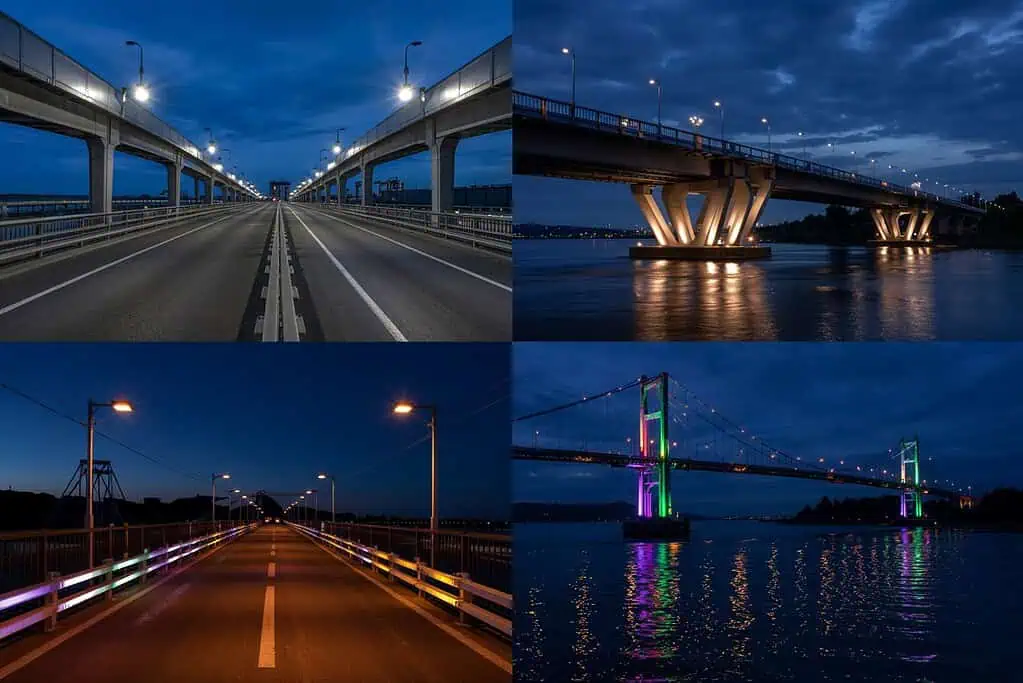
Bridge lighting systems can generally be grouped into three main categories. Each category serves a specific purpose, and together they form a balanced strategy that enhances both safety and visual impact.
1. Functional Lighting
Functional lighting focuses on safety and visibility. It ensures vehicles, pedestrians, and vessels can move across and around the bridge confidently, even in low-light or adverse weather conditions.
Roadway Lights
Roadway lights ensure drivers can see the traffic lanes when crossing a bridge at night. These lights minimize the chances of accidents by delivering consistent brightness across the whole road surface. Mounted on poles and spaced evenly along the bridge, they create a safe and comfortable driving experience.
Pedestrian and Cycleway Lights
Pedestrian and cycleway lights make bridges more user-friendly for people traveling on foot or by bike. Instead of harsh spotlights, they use softer beams that light the path without creating glare. They allow users to feel safe after dark and give the bridge a more welcoming atmosphere.
A 2023 study in Copenhagen found a 42% increase in nighttime bicycle usage after adding dedicated low-glare bridge lighting.
Under-Deck Navigation Lights
Under-deck navigation lights support the safe movement of vessels passing underneath the bridge. Placed in key visual areas below the structure, they outline the bridge shape and alert boat operators to height clearances. They play an essential role in avoiding collisions in busy waterways.
Pathway Lights
Pathway lights are designed for small walkways and access routes that connect to the bridge. They highlight curves, slopes, and junctions with gentle illumination, making the experience feel intuitive and stress-free. These lights also contribute to the overall look of the bridge by outlining the path edges.
Recessed LED Lights
Recessed LED lights sit flush with the bridge surface and offer subtle, low-profile lighting. They can be installed in steps, handrails, or deck slabs to highlight where people walk. This type of lighting blends into the architecture and raises safety without drawing too much attention.
LED products with recessed designs now last up to 60,000 hours, reducing maintenance labor by about 30% compared to older fixtures.
2. Architectural Lighting
Architectural lighting enhances the bridge’s structural features. It highlights design elements, adds depth, and turns the bridge into a visually striking landmark during evening and nighttime hours.
LED Wall Washer Lights
LED wall washer lights are used to cover large bridge surfaces with smooth, even illumination. They highlight architectural shapes and create dramatic visual effects at night. These lights are often installed at the base of structural walls, washing light upward to emphasize textures and details.
Facade Lights
Facade lights draw attention to unique design elements such as arches, columns, and decorative patterns. They bring out the character of the bridge by focusing light on specific areas rather than the entire surface. This makes the structure stand out and adds visual interest after sunset.
Linear LED Lights
Linear LED lights offer a sleek and continuous line of light along handrails, beams, or edges. They help define the bridge’s overall shape and give it a modern appearance. Because of their flexible design, they can follow curved or angled profiles without breaking the visual flow.
Spotlights
Spotlights are used to highlight specific features or focal points on the bridge, such as sculptures, towers, or support cables. They provide a narrow, concentrated beam of light that draws the viewer’s eye to the chosen detail. This adds depth and creates visual contrast within the lighting design.
Floodlights
Floodlights provide wide area coverage and are ideal for illuminating large sections of the bridge structure. Unlike spotlights, they distribute light over broader surfaces and help establish overall visibility. Floodlights are commonly used to enhance both safety and aesthetics from a distance.
Architectural Lighting
Architectural lighting combines different types of fixtures to highlight the bridge’s design while enhancing functionality. It considers materials, structure, and visual rhythm to create a balanced nighttime appearance. The goal is to elevate the bridge beyond simple illumination and turn it into a striking visual landmark.
3. Decorative & Dynamic Lighting
Decorative and dynamic lighting adds personality and movement to the bridge. It introduces color, motion, and visual interest, helping the structure stand out and support special events or celebrations.
LED Strip Lights
LED strip lights add a clean and continuous glow along railings, beams, and bridge outlines. These flexible strips follow the shape of the structure and help define its form in an eye-catching way. They’re a popular choice for creating subtle lighting effects without overwhelming the overall design.
Color-Changing RGB LEDs
Color-changing RGB LEDs bring motion and energy to the bridge with adjustable colors and lighting scenes. They can be programmed to shift tones, pulse, or react to events and holidays. This type of lighting creates a dynamic atmosphere and turns the bridge into a visual centerpiece for the area.
Underwater Lights
Underwater lights are installed below the waterline to illuminate the bridge supports and the water surface from beneath. They create dramatic reflections and intensify the overall lighting effect. These fixtures also help improve visibility near piers and enhance the aesthetic appeal with shimmering light patterns.
Essential Factors to Consider Before Choosing a Light Fixture
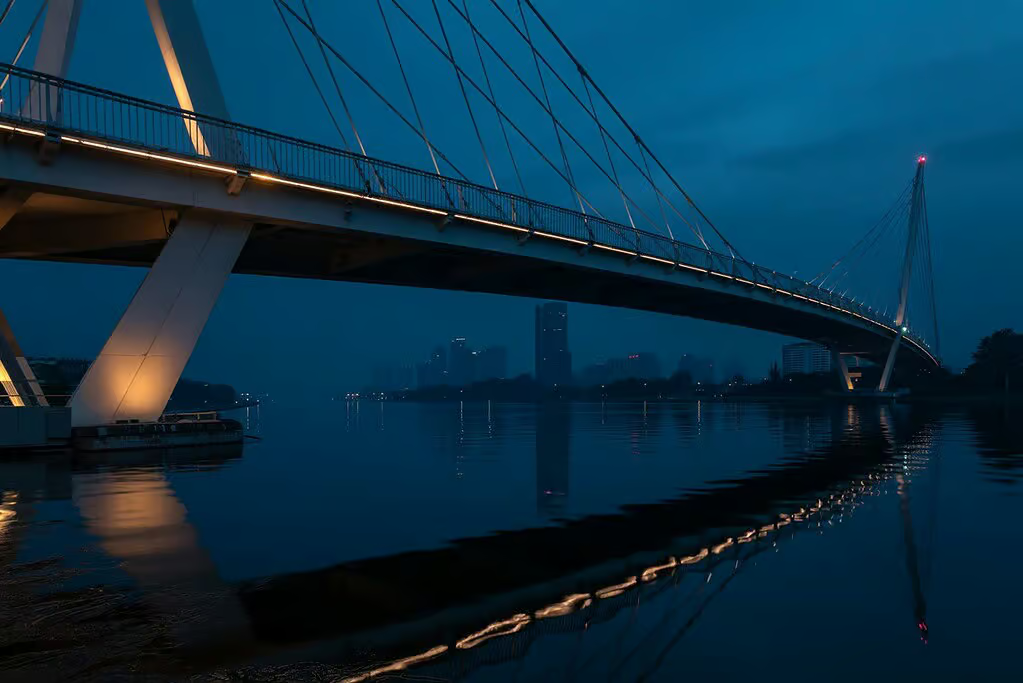
Before selecting any lighting fixture, it’s important to evaluate performance, durability, and sustainability. These key factors help ensure the lighting system delivers safe, long-lasting, and visually effective results.
1. Beam Angle
Selecting the proper beam angle has a significant impact on the bridge’s nighttime appearance. A narrow beam (10–30°) is ideal for highlighting specific structural elements such as arches or cables, while wider beams (60–120°) are better for large surfaces, helping to create balanced illumination and avoid uneven lighting across the bridge.
2. Light Spacing
Correct light spacing ensures smooth and consistent illumination throughout the bridge. Fixtures placed too far apart (over 10–12 feet) can create dark spots and break visual continuity. Tighter spacing, such as 5–8 feet, keeps the lighting uniform, reduces glare, and maintains a clean and visually appealing appearance during night hours.
3. Light Placement
Strategic placement affects both safety and aesthetics. Mounting lights at lower levels helps guide pedestrians and cyclists without causing glare. Installing fixtures higher or above eye level emphasizes key architectural features, minimizes unwanted shadows, and enhances the bridge’s visual depth, transforming it into a standout element of the surrounding nightscape.
4. Weather Resistance & IP Ratings
Bridge lighting must withstand rain, wind, and temperature fluctuations. Choosing fixtures with high protection levels, such as IP65 or higher, ensures durability against dust and water. In areas close to water or submerged zones, IP67–IP68 rated fixtures deliver maximum performance and greatly extend the lifespan of the lighting system.
5. Energy Efficiency & Sustainability
Energy-efficient lighting helps reduce operational costs and environmental impact. LED fixtures consume up to 70% less power than traditional options, while smart dimming controls allow brightness to be lowered during off-peak hours. Combining efficient hardware with intelligent controls improves sustainability without sacrificing the overall performance or visual impact of the bridge lights.
6. Compliance & Safety Standards
Lighting on bridges must meet regulatory standards to ensure safe use. Following guidelines like IESNA or CIE ensures proper brightness and fixture placement. In sensitive areas, installing anti-glare shields prevents light spill into residential zones or natural habitats, contributing to safe navigation and minimizing potential visual disturbance.
7. Maintenance & Accessibility
Easy maintenance ensures the long-term reliability of the lighting system. Fixtures equipped with modular components allow quick and simple replacements without major disruption. Positioning lights in easily accessible areas, such as handrails or service walkways, reduces maintenance effort and avoids the need for expensive equipment or temporary lane closures.
8. Light Pollution Control
Controlling light spill protects the surrounding environments and improves visual focus on the bridge itself. Using directional optics and full cut-off fixtures keeps the light confined to the structure. Maintaining a 0° upward tilt helps reduce skyglow and avoids disturbing nearby wildlife, making the lighting solution more responsible and efficient.
Global & Local Bridge Lighting Examples
1. Illuminated River – London
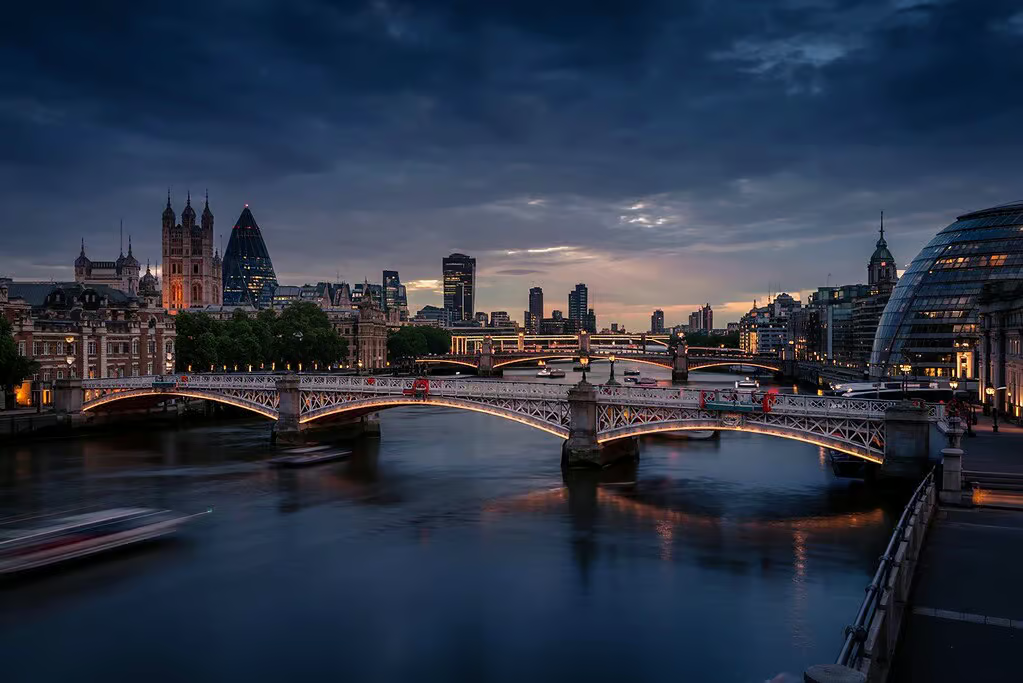
The Illuminated River project turns several London bridges into a continuous, color-coordinated light installation across the Thames. Each bridge features customized LED lighting that softly highlights its architecture and creates a calm, unified visual experience across the city’s riverfront.
“London’s Illuminated River project cost £45 million and attracts almost 9 million visitors annually”
2. The Bay Lights – San Francisco–Oakland Bay Bridge
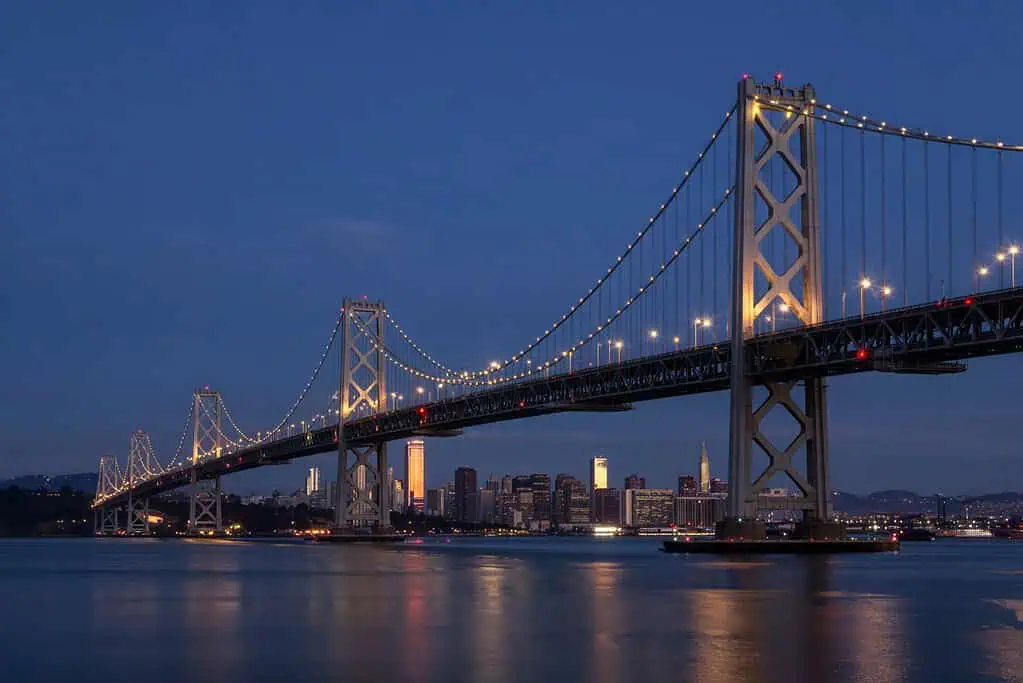
This large-scale light art display uses over 25,000 LED nodes to create animated light patterns along the bridge’s western span. This installation generates over US$100 million in annual tourism revenue according to the San Francisco Travel Association. The dynamic motion and changing sequences transform the bridge into a celebrated nighttime landmark visible across the San Francisco Bay.
3. Jacques Cartier Bridge – Montreal
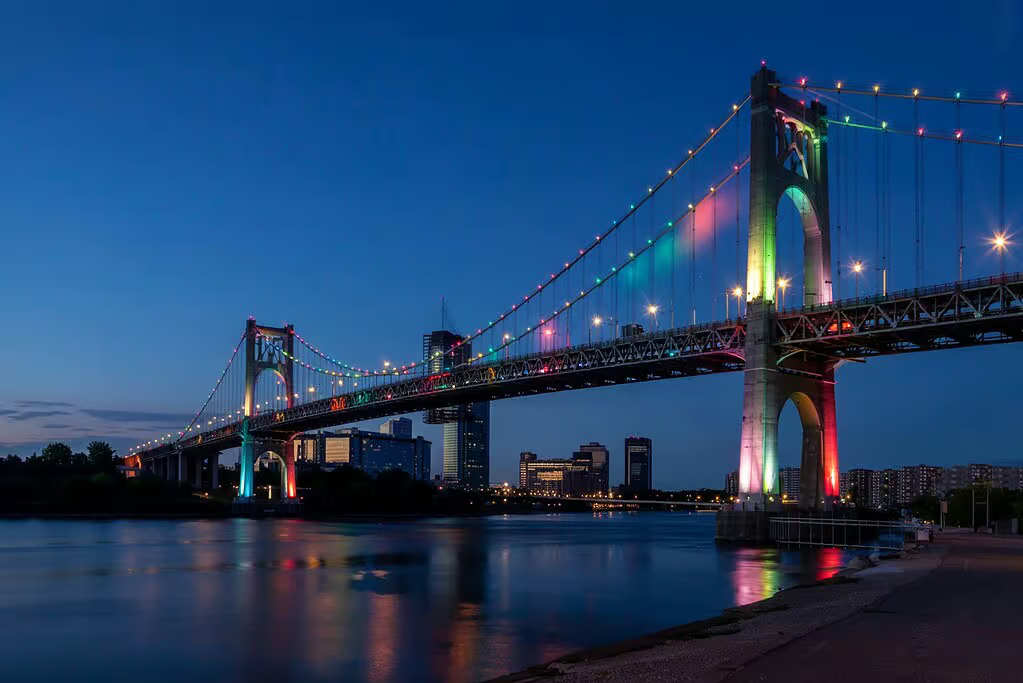
The Jacques Cartier Bridge features an intelligent lighting system that responds to real-time data like traffic flow and weather. Its LED lights shift in color and pattern depending on events and seasonal changes, creating a vibrant and ever-changing visual identity for the city.
4. Bridge of Peace – Tbilisi, Georgia
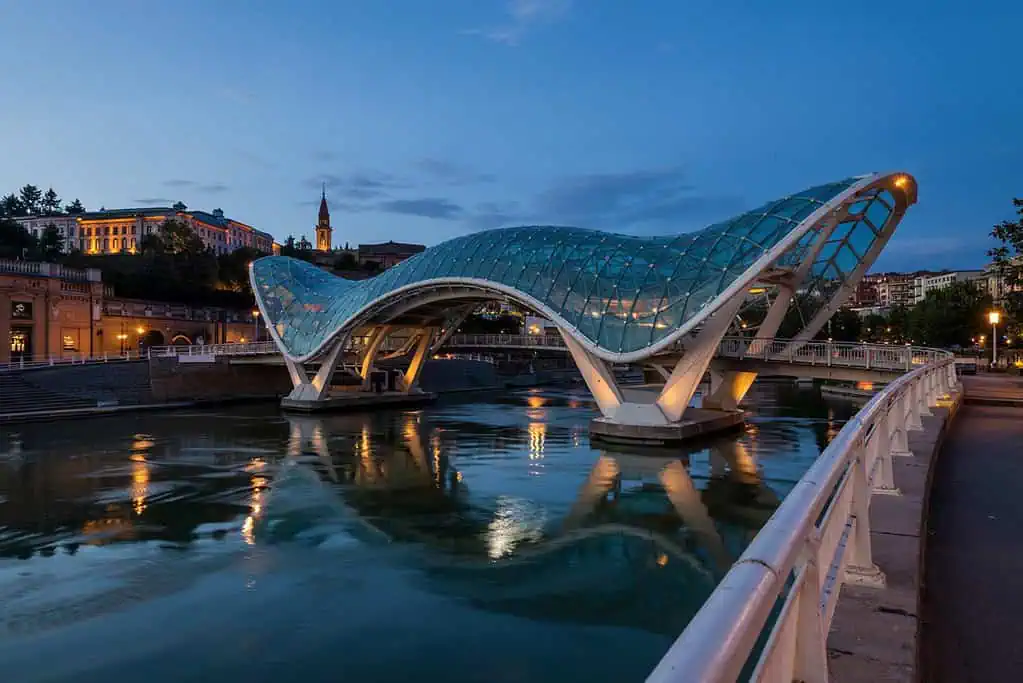
This modern pedestrian bridge uses integrated RGB LED lighting embedded in its glass and steel structure. The lights can display animated patterns and national colors, turning the bridge into both an architectural landmark and an interactive focal point during public events.
5. Gateshead Millennium Bridge – UK
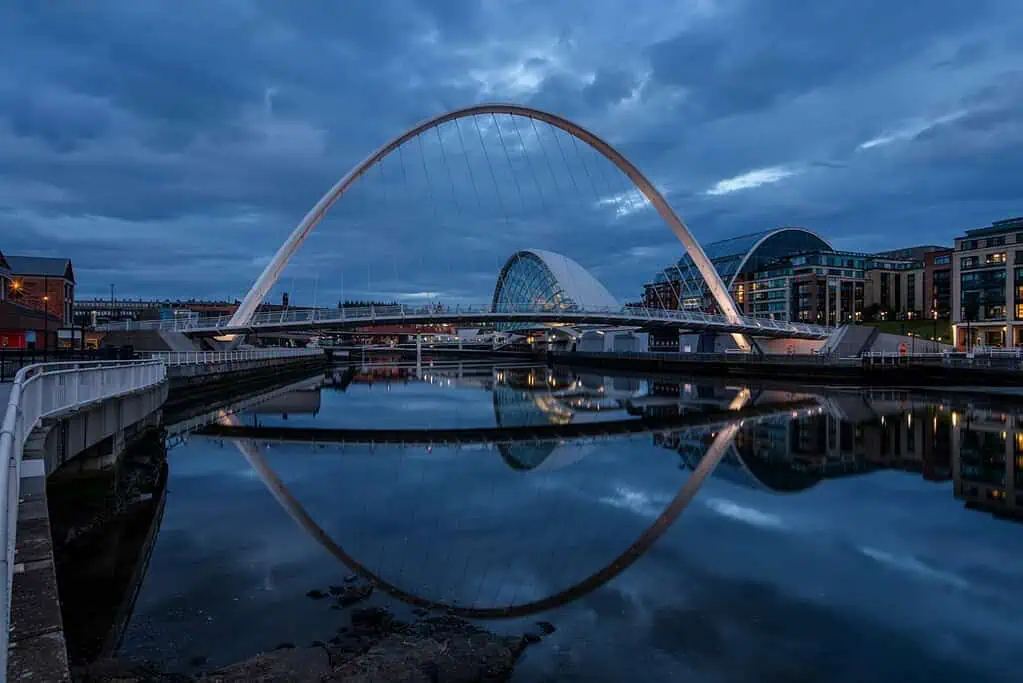
The Gateshead Millennium Bridge combines functional lighting for pedestrian safety with dramatic floodlighting that highlights its unique tilting arc shape. In the evening, color-changing fixtures wash over the structure, creating beautiful reflections across the River Tyne.
FAQs
Conclusion
Choosing the proper bridge lighting isn’t just about installing fixtures, it’s about creating a safer and more visually compelling environment that benefits both travelers and the wider community.
In most successful projects, designers first assess functional requirements (such as roadway visibility and navigation), and then layer architectural and decorative elements to reinforce the bridge’s identity.
By carefully considering factors like energy efficiency, IP ratings, maintenance access, and regulatory compliance, you can deliver a lighting system that remains safe, sustainable, and visually impressive for years to come. For best results, always consult certified lighting professionals and follow internationally recognized standards such as IESNA and CIE guidelines.