Considering upgrading your home’s lighting? Recessed lighting could be just the thing you need. It’s modern, sleek, and disappears into the ceiling. No bulky fixtures, no cords hanging down. Just clean, soft light that makes any room feel polished and inviting.
Homeowners and designers love recessed lighting because it brightens up a space without adding any clutter. You see it in kitchens, bathrooms, hallways, and living rooms. It’s low profile, looks great, and works even better.
But not all recessed lights are the same. If you’ve done any looking around, you’ve probably seen two main types: can and canless. They look the same, but they install differently, they perform differently, and they can impact your budget and your ceiling space in a big way.
So which one should you choose? Let’s break it down for you, so you can make the right choice without getting lost in the technical jargon.
What Is Can Recessed Lighting?
Can recessed lighting is a type of light fixture installed into a hollow opening in the ceiling, where the light sits inside a metal can-shaped housing, creating a clean, flush appearance with only the trim and light visible from below.
Here’s what it’s made of:
- Housing (the “can”) – This is the main structure that’s hidden in the ceiling. It holds the wiring and bulb and helps direct the light down.
- Trim – This is the visible part of the light. It gives the fixture a finished look and is available in various styles to match your room.
- Bulb – You can typically use standard LED, incandescent, or even smart light bulbs, depending on your setup.
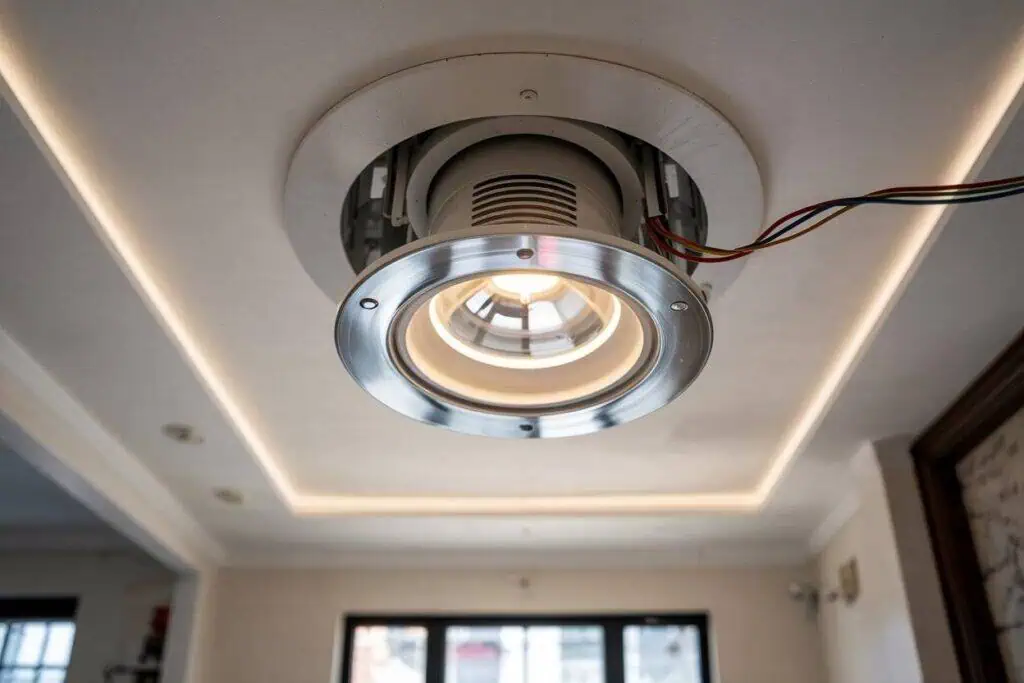
With can lighting, the whole housing is physically installed into the ceiling between joists. That usually means cutting a larger hole and ensuring there is sufficient space above the ceiling surface. It’s been the standard for years, especially in older homes and larger spaces.
Advantages:
- You can replace parts individually – If the trim or bulb stops working, no need to toss the whole thing.
- Better for insulation – Some housing can be IC-rated (Insulation Contact), meaning they can safely touch insulation without becoming a fire hazard.
- Built to last – They’re more rugged, especially in areas like high ceilings, attics, or where lights are used for many hours a day.
Drawbacks:
- Needs more ceiling space – The housing adds depth, so it’s not ideal for shallow ceilings or concrete barriers.
- Takes more time to install – You have to measure, cut, wire, and mount everything properly.
- Usually requires a pro – Unless you’re super handy, it’s a job most people leave to electricians.
So, while can recessed lighting offers durability and flexibility, it does come with a few extra steps—and potentially additional costs.
What Are Canless Recessed Lights?
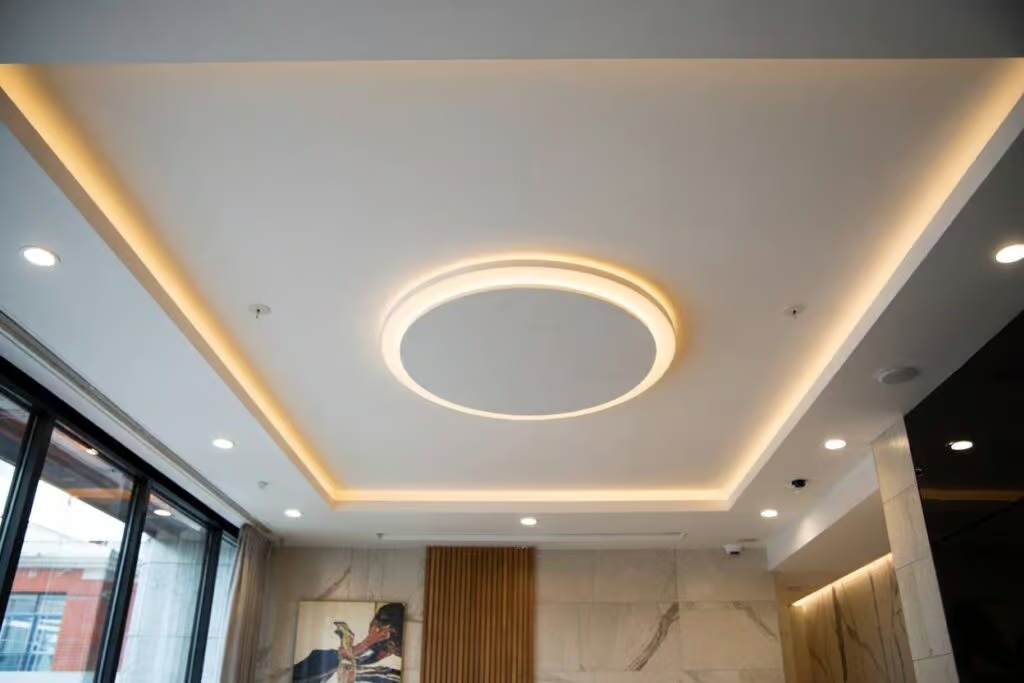
Canless recessed lights are modern LED fixtures that install directly into the ceiling without needing a separate can or housing. They utilize a built-in junction box and are ideal for ceilings with limited space or where traditional can lights cannot be installed.
No bulky housing. No deep holes in your ceiling. Just a super-slim disc that tucks right into the drywall.
Advantages:
- Easier to install – You can cut a small hole, wire it up, and pop the light in—no joist bracing or extra mounting brackets required.
- Great for tight spaces – If you’ve got limited ceiling depth, these lights slide in easily without needing major structural changes.
- Energy-saving – Since they use built-in LEDs, they consume less power and last for years, often rated for over 30,000 hours of use.
Drawbacks:
- You can’t swap out parts – If the LED fails, the whole fixture usually needs replacing. No changing bulbs here.
- Not always insulation-friendly – Some models can overheat if installed too close to insulation, unless they’re rated for it (look for IC-rated canless models).
- Shorter fix-it window – If something goes wrong, you’re more likely to replace the whole light than repair it.
So, canless recessed lighting is all about speed, simplicity, and sleekness, but it trades in some of the flexibility and repair options you get with traditional can lights.
Key Differences: Can vs Canless Recessed Lighting
So now that we’ve looked at both styles on their own, let’s put them side by side. Whether you’re renovating your entire home or just upgrading one room, it helps to see how can and canless lights stack up across the things that matter—like design, installation, space, and cost.
| Feature | Can Recessed Lighting | Canless Recessed Lights |
| Design | Requires a metal housing can | Slim, no housing needed |
| Installation | More complex | Quick and easy |
| Space Required | Needs deeper ceiling space | Fits in shallow ceilings |
| Maintenance | Replaceable parts | Must replace the entire unit |
| Lifespan | Varies (bulb-based) | Fixed LED lifespan |
| Cost | Higher upfront + labor | Lower labor cost |
When to Choose Can Recessed Lighting
So you’re thinking about lighting and wondering if recessed lights are the right pick. It depends on the setup of your home and the extent of your renovations.
1. Best for New Construction or Major Renovations
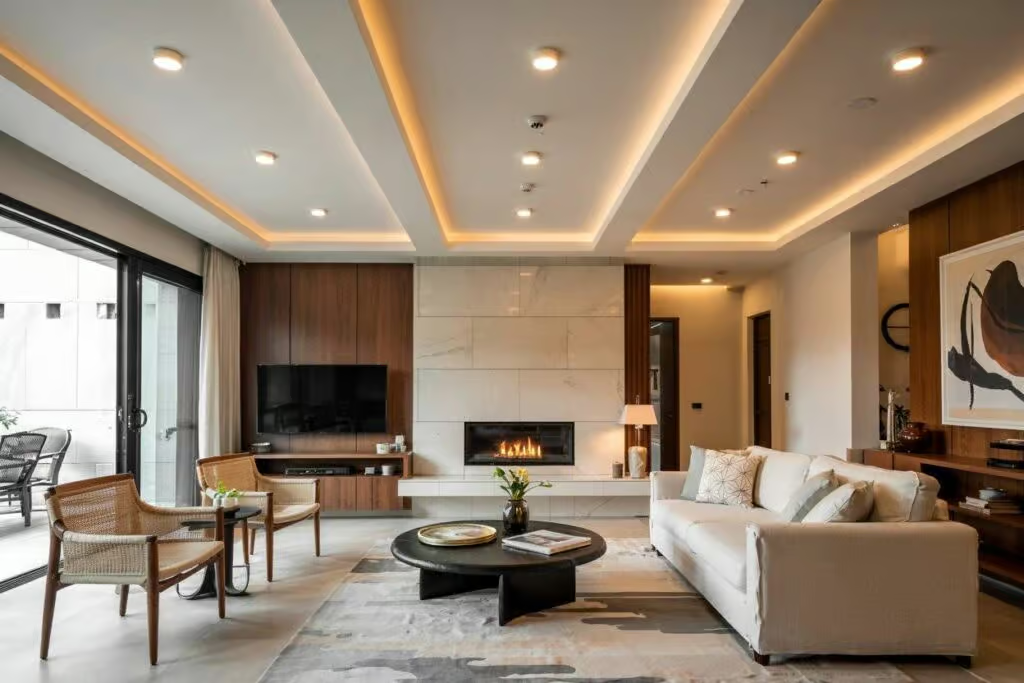
Can recessed lights are ideal when you’re building a new home or doing a major remodel. That’s because they need space above the ceiling—either in the attic or between joists—to fit the housing. If your walls are already finished and you’re not tearing them down, installing cans can be a lot of extra work. But if the walls are open anyway? It’s the perfect time.
2. If You Need Adjustable Insulation (IC-Rated Cans)
Live in a place where insulation is packed up tight in the ceiling? Then you’ll want IC-rated can lights. These are designed to be safely installed with insulation in contact with the housing. That means no fire risk, no overheating—just peace of mind. IC stands for “Insulation Contact,” and it’s something you don’t want to skip if your attic or ceiling space is full of insulation. Additionally, these cans are often airtight, which helps keep your heating and cooling bills under control.
3. When Future Bulb Replacement or Upgrades Are Important
If you like the idea of easily swapping out bulbs later, or maybe upgrading to smart lighting down the road, can recessed lights make that simple? Most of these fixtures use standard sockets, so you’re not locked into one type of bulb. Whether it’s LED today or something more advanced tomorrow, you’ve got flexibility. It’s also easier to replace a faulty bulb without having to disassemble the entire fixture, which can be a headache with some modern, low-profile, or sealed options.
4. High Ceilings or Attic Access Is Available
Can lights work best when there’s room to work above the ceiling, like in homes with high ceilings or easy attic access. That extra space makes it much easier to install the housing and wire everything safely. If your ceiling is tight with no attic above, it gets tricky fast. However, with proper clearance, cans can be installed cleanly and remain out of sight, providing a smooth, streamlined appearance.
When to Choose Canless Recessed Lights
Canless recessed lights are a solid option when space is tight or you just don’t want the hassle of full housing. These low-profile lights bring a clean, modern look—and they’re surprisingly easy to work with.
1. Ideal for Remodels and Finished Ceilings
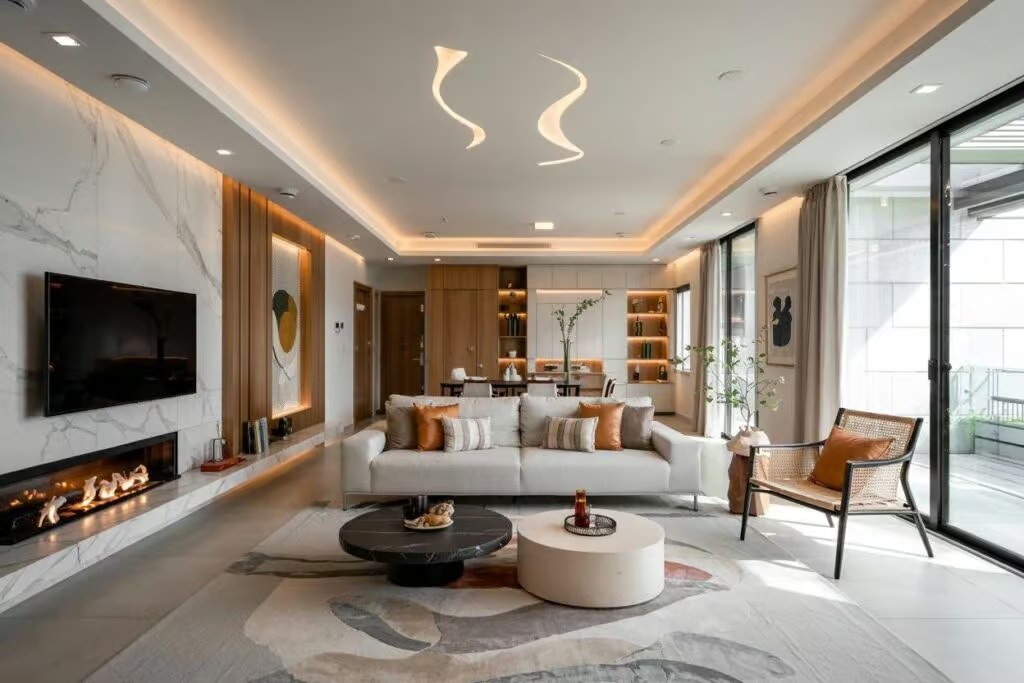
If your ceiling is already finished and you don’t want to rip it open, canless lights are a lifesaver. They don’t need bulky housings like traditional cans, which makes them easier to slide into existing drywall. Whether you’re upgrading a bedroom, hallway, or kitchen, they keep things simple and mess-free.
2. When Dealing with Limited Ceiling Space (Basements, Condos)
Tight ceilings? No problem. Canless recessed lights are designed for low-clearance areas where traditional cans simply won’t fit. Think basements, condos, or rooms with concrete above the ceiling—places where there’s little to no wiggle room. Since these lights are ultra-thin, they slip right in without needing an attic or much depth. It’s one of the easiest ways to get overhead lighting in compact spaces.
3. For Energy Efficiency and Minimal Maintenance
Canless lights are almost always LED, which means they’re built for energy savings right out of the box. They use significantly less electricity than traditional bulbs and last for years, sometimes decades, without needing replacement. No buzzing, no heat, and no climbing ladders every few months to switch bulbs. Once they’re in, you pretty much forget about them. Perfect for a set-it-and-forget-it lighting setup.
4. Quick DIY Installations
If you like the idea of doing it yourself, canless lights are your friend. They’re lightweight, come with built-in junction boxes, and often snap right into place with spring clips. No can, no extra hardware, and no need to crawl around in the attic. Simply cut a hole, wire it up, and insert it. For weekend warriors or anyone avoiding a full renovation, these lights make it easy to upgrade a room fast.
Common Installation Mistakes to Avoid
| Mistake | Why It’s a Problem |
| Ignoring ceiling depth requirements | Can lights need enough space inside the ceiling—Forcing them into tight areas can lead to poor fit or damage. |
| Overheating risk with can fixtures and insulation | Non-IC-rated cans can overheat if insulation is packed too close, risking fixture failure or fire. |
| Not using IC-rated cans in insulated ceilings. | IC-rated cans are designed to withstand insulation contact; using non-rated ones can be unsafe. |
| Choosing non-dimmable canless fixtures with dimmer switches | Causes flickering or buzzing, and may damage the light. Always check compatibility before installation. |
Installing recessed lighting isn’t rocket science, but there are a few common mistakes that can lead to significant problems if you’re not careful. Whether you’re going with can or canless lights, here’s what you’ll want to steer clear of.
FAQs
Final Verdict
Both can and canless recessed lights have their strengths—it comes down to what your space needs and how involved you want to be.
Can recessed lights bring durability and flexibility. You can swap out bulbs, use different trims, and count on them for high ceilings or insulated areas. They’re a great pick if you’re building from scratch or doing a full reno where ceiling access isn’t a problem.
Canless recessed lights, on the other hand, are all about speed and simplicity. They slide right into tight spaces, use less energy, and don’t need bulb replacements. Perfect for basements, remodels, and places where every inch of ceiling space counts.
So, how do you choose?
- Go with can lighting if you’re working on new construction, want the freedom to change bulbs, or have specific insulation needs.
- Choose canless lighting if you’re remodeling, have limited space, or want something easy to install with minimal upkeep.
And here’s the key—think long-term. Consider how easy it’ll be to replace parts later, the amount of ceiling space you’re working with, and whether you prefer to do it yourself or hire a professional.
Ultimately, both types can enhance the beauty of your home. It’s just about picking what works best for your space and lifestyle.