
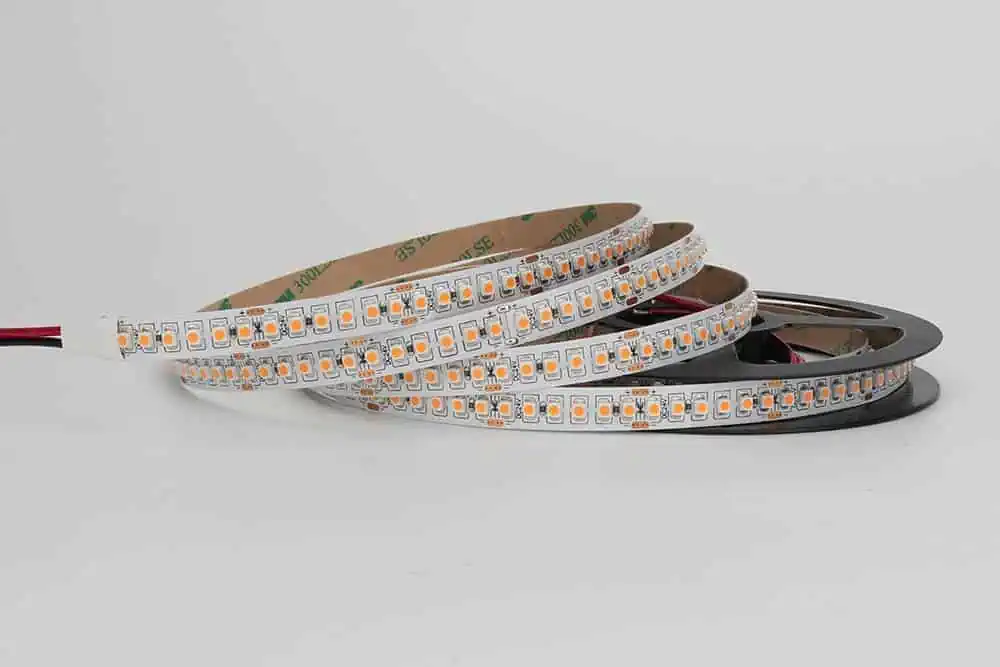
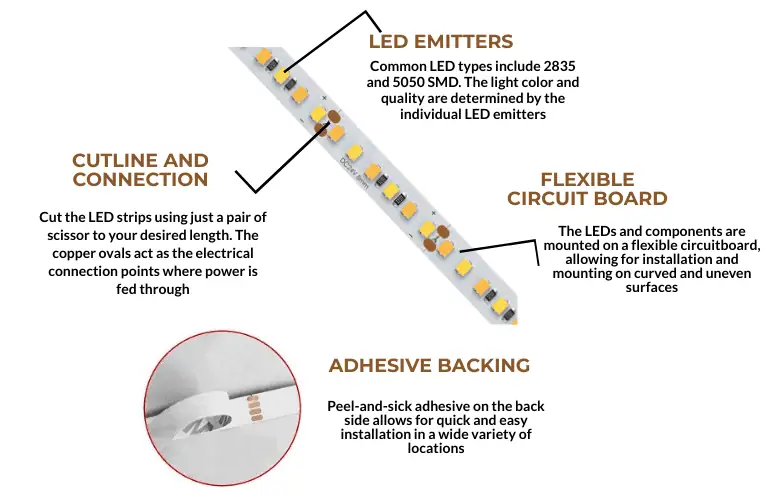
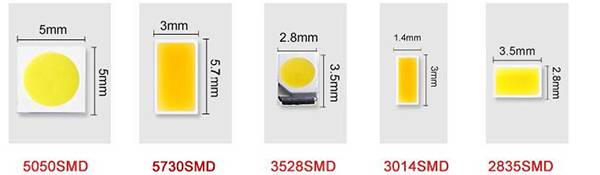
LED lamp beads are the most critical components of LED strips. There are many kinds of LED lamp beads, and they are named according to their size. For example, the most common ones are SMD5050 and SMD2835. The size of SMD5050 is 5.0*5.0mm. The LED lamp beads’ life determines the LED strip’s life, which can be calculated from the LM80 test report. For more information, you can read How Long Do LED Strip Lights Last?
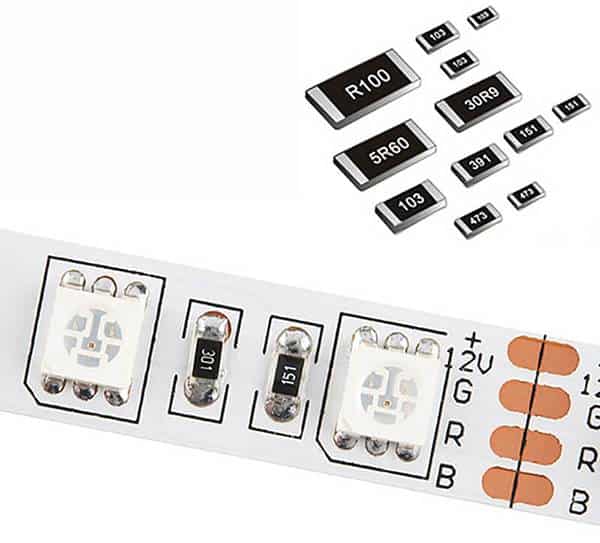
A resistor prevents the LED light from passing too much current and stops the LED from burning. LED strips use SMD resistors. SMD resistors are black with numbers printed on them, and the numbers indicate the resistance value of the resistor. The number is composed of 3 digits, and the last digit indicates how many zeros there are after the previous 2 digits. For example, 151 means 150 ohms.
Most LED strips only have LED beads and resistors. Some LED lights come with lamp beads, resistors, and ICs, which we call constant current LED light strips. Constant current LED strips can solve the voltage drop problem of LED strips. The voltage drop problem is that the farther the LED strip is from the power supply, the dimmer the part.

FPCB(flexible printed circuit board), the primary material is copper, and its function is to electrically connect components such as lamp beads, resistors, and ICs. Another role of FPCB is to help LED strips dissipate heat faster. Excessive heat will shorten the life of the LED strip. The amount of copper in the FPCB determines the amount of current that can pass. The width and thickness parameters of FPCB are the most concerned. Common widths are 10mm, 12mm, and 15mm, and common thicknesses are 2 ounces and 3 ounces.

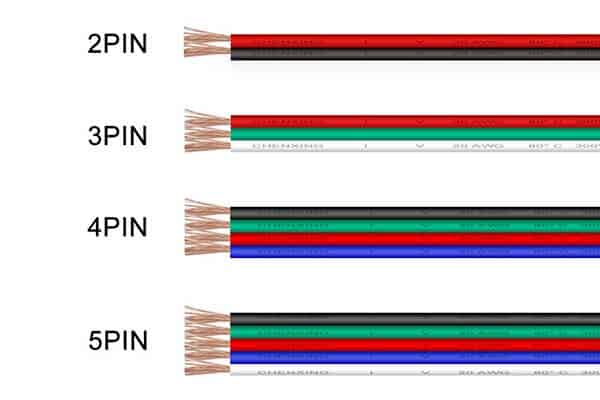
The ends of the LED strips will be soldered with wires for easy connection to the LED power supply. The size of the wire is usually 18AWG or 20AWG. The cables have 2PINs, 3PINs, 4PINs, and 5PINs for single color, tunable white, RGB, RGBW, and RGBTW strips.
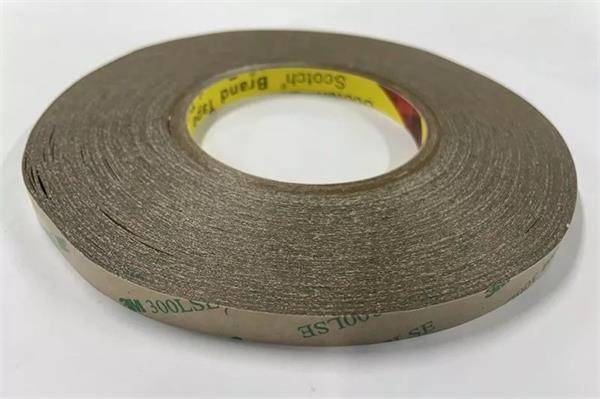
Double-sided tape is usually on the back of the LED strip, which is also an important component. 3M is one of the best brands. The LED strip may fall off if poor-quality double-sided tape is used. There are many double-sided tapes, and different types of double-sided tapes are used in different scenarios. For more detailed information, please read How to Choose The Right Adhesive Tapes For LED Strip.
If you need to use LED light strips outdoors, then the LED light strips need to be waterproof. LED strips usually use silicone to make them waterproof. We have the following waterproof grades, IP52(silicone coating), IP65(silicone tube), IP65H(heat shrink tube), and IP67(silicone encased). For more knowledge about waterproof LED strips, please read A Guide to Waterproof LED Strip Lights.
